Complex History: Navigating Conflicts and Maintaining Sovereignty
When the term “war” is mentioned in a Southeast Asian context, one might immediately think of conflicts in Vietnam, Cambodia, or Myanmar. However, the military and diplomatic history of Thailand (formerly Siam) is far more complex than simple neutrality. While the nation famously remains the only country in Southeast Asia never to have been formally colonized by a European power, its history is punctuated by numerous internal struggles, border conflicts. And strategic alignments with major global powers, often undertaken to preserve its independence.
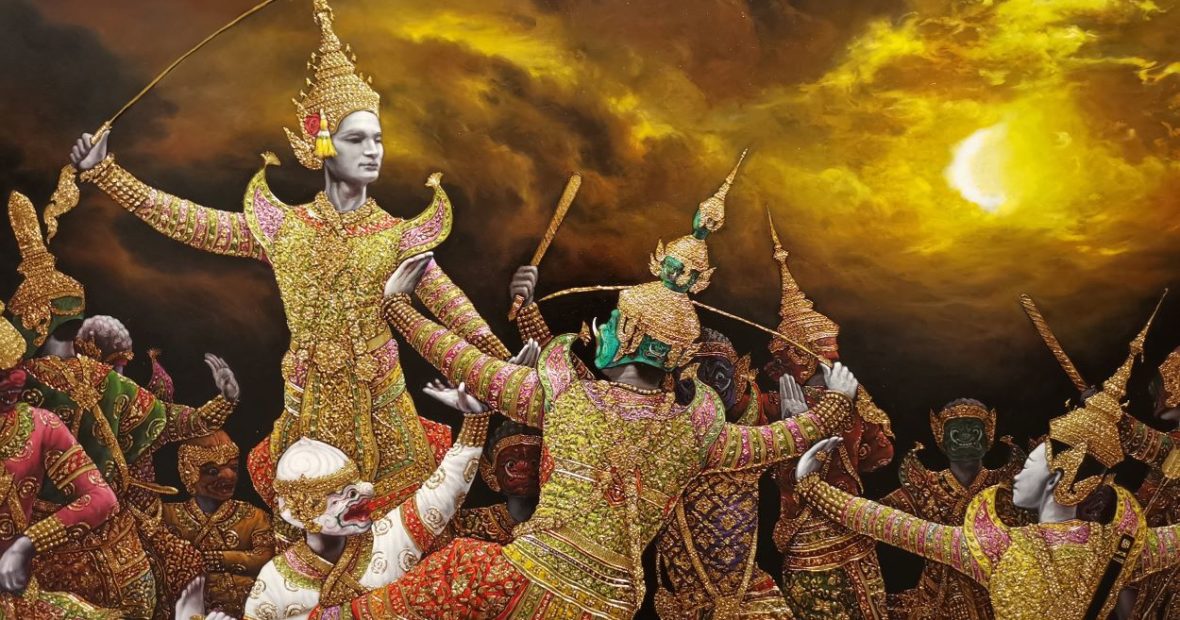
Understanding Thailand’s war history requires looking beyond massive, defined wars and focusing on its unique geopolitical strategy. A sophisticated, often pragmatic dance between regional rivals and powerful Western nations, designed to maintain national sovereignty at all costs.
The Historical Context: The Kingdom of Siam and Regional Dominance
For centuries, the Kingdom of Siam was a dominant regional power, engaged in frequent, intense wars with its neighbors, primarily the Burmese (Konbaung Dynasty) and the Khmer (Cambodia).
The Siamese-Burmese Wars
The most enduring and destructive conflicts in Thai history were the intermittent wars with the Burmese. These were not minor skirmishes but existential struggles that involved the sacking of capitals. The destruction of Ayutthaya, the Siamese capital, in 1767 by the Burmese is a watershed moment. Leading to the collapse of the old kingdom and the eventual rise of the new capital, Bangkok, under the Chakri Dynasty (the current ruling house).
These conflicts established a deep-seated tradition of resilience and military organization, forging the national identity through shared defense. And eventual successful resistance under leaders like King Taksin the Great and King Rama I.
Expansion and Border Conflicts
Siam also engaged in numerous wars of expansion and control with the kingdoms in Laos. And Cambodia throughout the 18th and 19th centuries, establishing the vast boundaries of modern Thailand. These conflicts often served as buffer mechanisms against external threats and were integral to securing the fertile central plains.
The Strategic Lesson: Thailand’s early conflicts were defined by regional rivalry. Hardening its military culture and emphasizing the importance of a strong central government.
The 20th Century: Navigating the Colonial Crucible
Thailand’s greatest success was its ability to avoid Western colonization, a feat achieved not through military might. But through brilliant, calculated diplomacy and strategic concessions. This period, though not defined by one single war against a colonial power, was a continuous state of diplomatic conflict.
The Role of Modernization
Under the reigns of King Mongkut (Rama IV) and King Chulalongkorn (Rama V) in the late 19th. And early 20th centuries, Siam implemented rapid, selective modernization. By adopting Western administrative, military, and educational systems. They demonstrated that Siam was a “civilized” and competent nation, undercutting the European pretext for invasion.
The Buffer State Strategy
Siam strategically ceded peripheral territories (in modern Laos, Cambodia, and Malaysia) to France and Great Britain. While painful, these concessions created a crucial buffer zone between the rival imperial powers of French Indochina and British Burma/Malaya. By offering itself as a neutral, modernized buffer state, Siam maintained its core independence.
The Strategic Lesson: Thailand learned the power of pragmatic neutrality and modernization as tools for national survival.
World War II: The Tightrope Walk
Thailand’s involvement in World War II perfectly illustrates its historical strategy of choosing the path that guarantees national survival and minimal disruption.
- Initial Invasion and Alliance: In December 1941, the Japanese invaded Thailand. Recognizing the futility of resistance against the Japanese juggernaut, the Thai government quickly signed a military alliance with Japan, allowing the transit of Japanese troops and even declaring war on the Allies. This decision was largely driven by military pragmatism and the belief that Japan would win the war.
- The “Free Thai” Movement: Simultaneously, a powerful, clandestine resistance movement known as the Seri Thai (Free Thai), led by the Regent Pridi Banomyong and supported by the Thai ambassador in Washington, DC, actively worked with the Allies (the US Office of Strategic Services). They supplied intelligence and planned resistance.
This tightrope walk—publicly cooperating with the Axis while secretly aiding the Allies—ensured that when Japan was defeated, the United States refused to recognize the Thai declaration of war. Thailand was treated as a nation that had been coerced, thus avoiding punitive post-war measures and maintaining its full sovereignty.
Modern Conflicts: Insurgency and Border Skirmishes
In the latter half of the 20th century and into the 21st, Thailand’s military engagements have largely been internal and localized.
- Communist Insurgency: From the 1960s to the 1980s, Thailand successfully fought a long counter-insurgency war against domestic communist forces, often receiving significant US military and economic aid as a bulwark against the spread of communism in Southeast Asia.
- Southern Insurgency: The most persistent modern conflict is the ongoing, low-level insurgency in the southern border provinces (Pattani, Yala, Narathiwat), fueled by ethno-nationalist and religious grievances. This conflict remains a significant security and political challenge for the Thai government.
- Preah Vihear Temple Dispute: Throughout the 2000s and 2010s, military clashes occurred with Cambodia over the disputed territory surrounding the ancient Preah Vihear Temple, a conflict settled primarily through international legal means.
Conclusion: A History of Strategic Self-Preservation
Thailand’s war history is less about decisive, declared wars against foreign powers and more about a sustained, sophisticated struggle for strategic self-preservation. From balancing powerful regional rivals in the 18th century to mastering the diplomatic tightrope walk during the age of colonialism and World War II, Thailand consistently prioritized its political independence above all else. Its history of conflict and cooperation demonstrates a masterful use of diplomacy, modernization, and military pragmatism—lessons that continue to shape its foreign policy today.


